Long enough to believe there was nothing left to discover about him. Long enough to feel certain that our future was built on trust and understanding.
He lost his parents when he was still a little boy. The memories he had of them were faint—just a few old photographs and scattered stories he had heard while growing up.
The person who truly became his family was his great-aunt, Martha.
She wasn’t simply the relative who took him in.
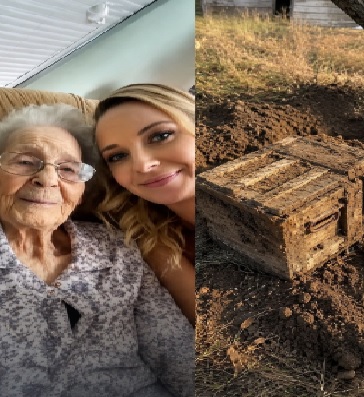
She became his home, his greatest source of comfort, and the one person who knew every chapter of his childhood.
I loved her almost immediately.
Not because I felt I should, but because she had a quiet kindness that made everyone around her feel welcome.
Every Sunday afternoon, we visited her cozy cottage. Before we even stepped inside, the smell of freshly baked apple pie filled the air.
She always smiled and said that the best recipes were made with patience rather than perfection.
Those visits soon became the highlight of every week.
We spent hours on her back porch drinking tea while she shared memories from years gone by, laughed at old family stories, and reminded us that every difficult season eventually passes.
She had a remarkable way of making ordinary moments unforgettable.
Then, one fall, subtle changes began to appear.
She misplaced everyday things.
Forgot appointments.
Repeated conversations she didn’t remember having.
At first, none of us thought much of it.
But the changes gradually became impossible to ignore.
One quiet evening, she took my hand and softly said,
«If one day I forget your name, don’t let that stop you from loving me. The heart remembers people long after the mind begins to let go.»
Those words stayed with me.
When doctors diagnosed the early stages of dementia, Daniel was heartbroken.
He wasn’t only watching the woman who had raised him slowly fade away.
He was losing the last person who remembered every step of his early life.
From then on, we spent as much time with her as we could.
We labeled drawers, filled the walls with family photographs, and placed handwritten reminders throughout the house.
Some days she greeted us with joy the moment we arrived.
Other days she politely asked if we had met before.
Every visit carried hope and heartbreak at the same time.
One afternoon, while sorting through old belongings in the attic, we discovered a weathered wooden chest hidden beneath a blanket.
Inside were dozens of carefully sealed envelopes.
Each one had Daniel’s name written neatly across the front.
Every letter began with the same words:
«If I can no longer tell you this myself…»
She had written them over many years.
One for every birthday.
One for his graduation.
One for his wedding day.
One for the day he might become a father.
And several for the moments when life would make him question his own strength.
They weren’t instructions.
They were reminders.
That he had always been deeply loved.
That he would never face life completely alone.
And that painful experiences could shape a person’s journey without defining their worth.
Daniel opened the first letter with trembling hands.
Then another.
And another.
Neither of us spoke as tears quietly filled the room.
When Martha passed away a few months later, her absence left a silence that seemed impossible to fill.
But she also left behind something extraordinary.
A lifetime of love preserved in handwritten words.
Today, those letters remain safely tucked away on the top shelf of our bookcase.
We read them only on the days when life feels especially heavy.
Every time we unfold another page, it feels as though she’s sitting beside us once again.
And every letter reminds us of one lasting truth:
The people we love may not stay with us forever, but the love they leave behind has the power to remain with us for a lifetime.